Greetings from Munich Germany.
Today was the last day of the European Society of Cardiology Congress. I had a great time, learned a ton and met an amazing group of medical journalists from theHeart.org.
On the last day, I decided to attend a bit ‘softer’ session. Provocatively titled, A drinker, rather than a smoker, is at risk for atrial fibrillation, the Japanese researcher presented intriguing information on the association of drinking alcohol and atrial fibrillation.
You can view my thoughts on the matter over at Trials and Fibrillations on theHeart.org.
Sorry.
It’s oh so ironic that you can buy beer, wine and some sort of hot dog-on-steroids right in the middle of the convention–at 1030 in the morning.
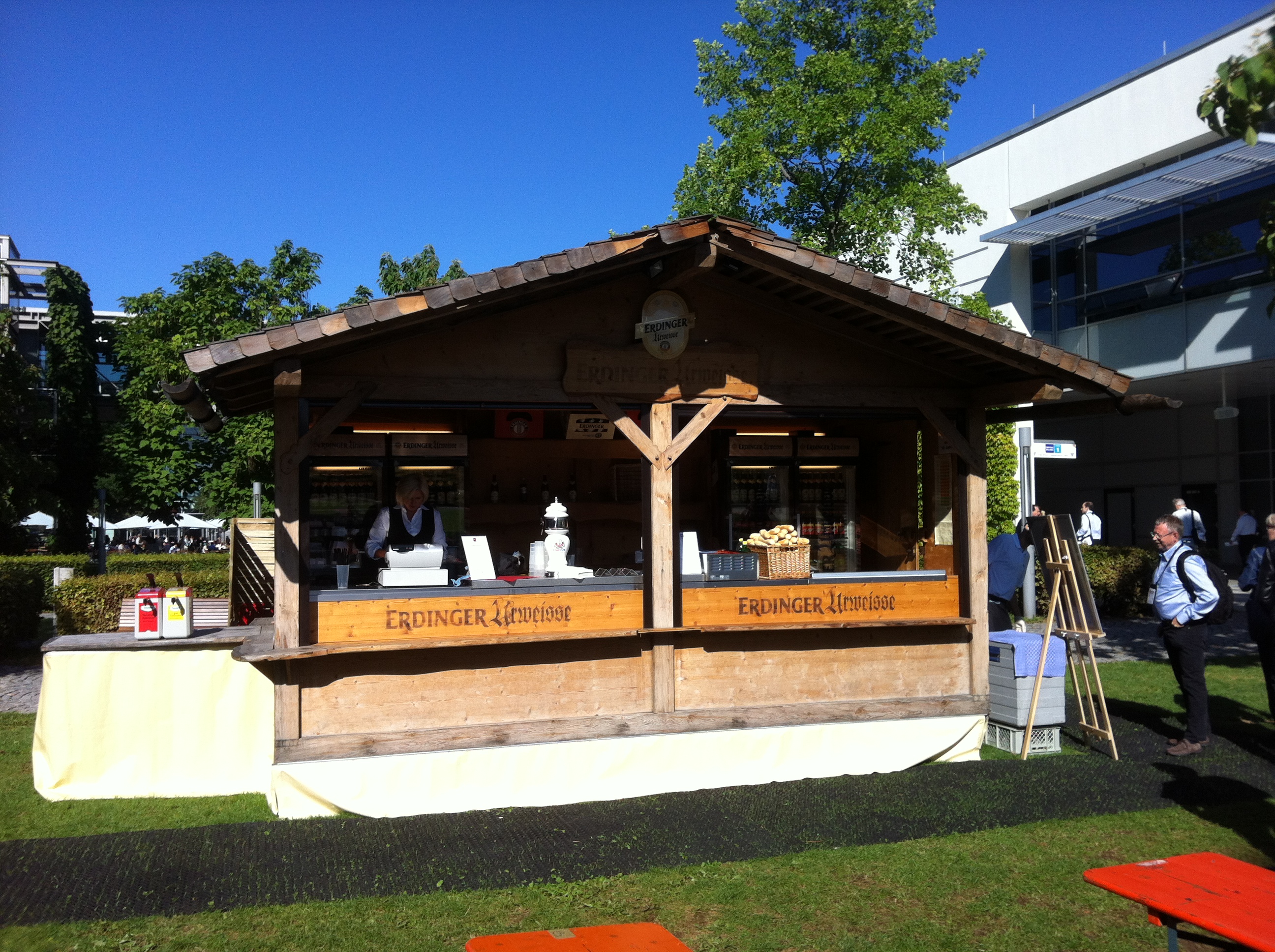
“This is normal?”
The young German lady serving the happy delegates answers my inquiry with a grin.
JMM
3 replies on “Cycling Wed: Alcohol and the risk of arrhythmia. New post up at theHeart.org”
As an afib patient (ablation 9 months ago), I have a theory based on personal experience. People generally smoke on a fairly consistent basis throughout the day, while drinking generally takes place only at the end. One of my afib triggers tended to be lack of consistency, whether it was food, drink or exercise. Another observation is that alcohol relaxes muscles; could there be a “kickback” effect on the heart muscle after the alcohol wears off triggering afib. Also, your anecdotal experience you counted as weak evidence–from a patient’s perspective, I say it is right on the mark.
When we drove around Germany we were stunned at the beer consumption as well as that of saturated fats. How do their stats compare to Americans? Do they have more or less afib?
One thing I have learned as a patient is that medical science doesn’t really know what causes atrial fibrillation. There are some correlations such as age, hypertension, alcohol consumption etc. but causal links seem hard to come by. My case presented after a kidney stone attack (my first and, I hope, my last), but I don’t know if that was a coincidence.